
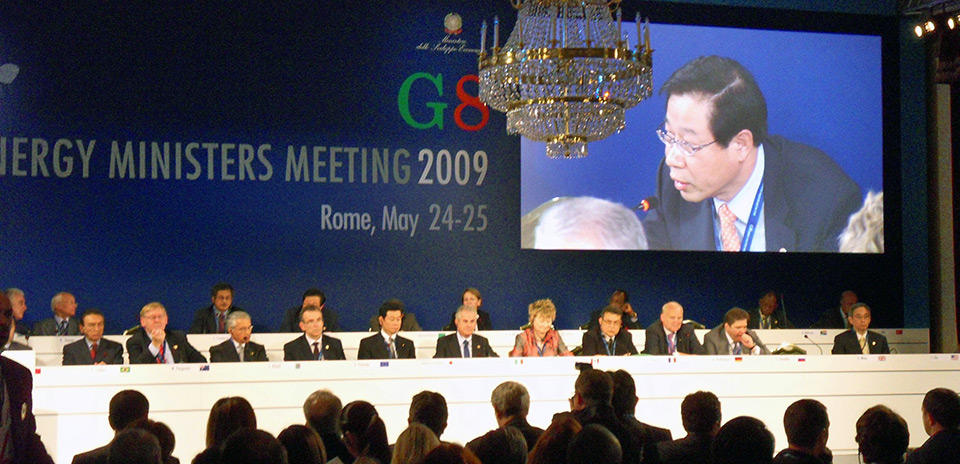
Sono lieto di presentare la riunione G8 dei Ministri dell’Energia che il Ministero dello Sviluppo Economico organizza nell’ambito della Presidenza Italiana del G8. La riunione dei Ministri dell’Energia ha l’obiettivo di individuare e concordare politiche energetiche e azioni che contribuiscano a superare l’attuale situazione di crisi economica e finanziaria affrontando le grandi sfide che ci attendono. Le conclusioni della riunione verranno portate al Vertice dei Capi di Stato e di Governo previsto all’isola della Maddalena nel luglio 2009.
È necessario garantire la sicurezza degli approvvigionamenti energetici, contrastare il cambiamento climatico globale dovuto alle emissioni di gas con effetto serra provenienti soprattutto dal settore energetico, promuovere la competitività delle nostre economie, assicurare l’accesso alle fonti di energia e all’energia elettrica alle popolazioni del pianeta che ancora vivono in condizioni di assoluta povertà. Alla riunione dei Ministri dell’Energia parteciperanno, oltre ai Paesi del G8, anche le economie emergenti, come: Cina, India, Sud Africa, Brasile, Messico insieme ad Arabia Saudita ed Egitto. Alle discussioni sul cambiamento di clima e sulla povertà energetica in Africa verranno associati Algeria, Rwanda, Australia, Corea del Sud, Nigeria, Indonesia e Turchia. L’intenzione è di giungere a risultati pratici anche stabilendo collegamenti con altri programmi ed iniziative avviate in sede di G8. Si vuole che i Ministri definiscano regole e principi per un nuovo ordine mondiale dell’energia, diano impulso agli investimenti, stabiliscano forme di partenariato per lo sviluppo delle tecnologie a basso contenuto di carbonio e dell’efficienza energetica, diano avvio ad un piano di azione per la riduzione della povertà nel continente africano.
Cos’è il G8 Energy
Oltre la crisi: verso un nuovo ordine mondiale dell’energia è il tema generale della riunione G8 dei Ministri dell’energia. Alla riunione, preceduta dal Forum delle imprese dell’energia, partecipano i Ministri di Canada, Francia, Germania, Giappone, Italia, Regno Unito, Russia, Stati Uniti e il Commissario Europeo, insieme ai Ministri di economie emergenti non appartenenti al Gruppo degli 8 come Cina, India, Sud Africa, Brasile, Messico, Arabia Saudita, Egitto e ai Ministri di altri Paesi della regione del Pacifico e dell’Africa. I problemi che si vogliono affrontare con la presidenza dell’Italia sono la promozione degli investimenti nell’energia per la sicurezza e lo sviluppo sostenibile, le strategie energetiche di risposta al cambiamento climatico globale, il programma di azione contro la povertà energetica con particolare attenzione per il continente africano.
Cos’è l’Energy Business Forum (EBF)
La riunione G8 dei Ministri dell’Energia è preceduta dal Forum delle imprese, l’Energy Business Forum, che ha per tema la promozione degli investimenti per affrontare la crisi. Al Forum partecipano, insieme ai Ministri provenienti dai Paesi del G8 e dalle economie emergenti, anche i vertici delle più importanti imprese energetiche del mondo. Obiettivi sono, da un lato, l’individuazione degli ostacoli che rallentano o impediscono la realizzazione dei grandi progetti energetici e frenano l’innovazione tecnologica, dall’altro lato la definizione di azioni che i governi o i governi in collaborazione con le imprese possono avviare per rilanciare gli investimenti dando nuovo impulso alle economie. Le imprese invitate rappresentano i principali settori di impegno: petrolio e gas naturale, fonti rinnovabili, energia nucleare, sistemi e tecnologie avanzate per il carbone e per l’utilizzo efficiente dell’energia.
—
Traduzione Sito Offerta dall’agenzia Traduzione.it